The third book in the oh-so popular Millennium-series by Swedish author Stieg Larsson, in English titled The Girl Who Kicked the Hornet's Nest, is hitting the United States these days. If we are to believe the Swedish tabloids, it is nothing short of a major success, a "Stieg-fever in the states", even. I have earlier written about the meaning of Swedish success in the States, and will not repeat myself here. Good reviews from LA Times, New York Times, USA Today, and Washington Post is impressive for sure. Foreign releases rarely bring huge hypes with them in the US, and especially not from smaller countries such as Sweden. What the Millennium-trilogy has brought with it to the US scene seems to have quite a bit to do with the character of Lisbeth Salander. "Americans are not used to such complex portraits of women. Women rarely get to have dark sides in our culture", says Maria Cellner, from a bookstore in New York.
I found this quote very interesting. It touches on something I have been pondering for quite some time but have not been able to put my finger on. I would argue that the US have if not the same then at least similar standards in equality when it comes to women in the workplace, wages, women in leading positions, and so on, compared to say Scandinavian countries and the majority of West European nations. Through the early entrance of modernity in the shape of technical appliances in the home American women were not always resorted to domestic work in the 1940s and 1950s, but could do other things, such as enter the workplace. This happened far earlier in the US than in Western Europe. But when it comes to issues of gender roles the US is hopelessly lagging. The larger parts of American society is very much stuck on old, idealized images of how women and men should be and behave. Guys should be strong, physical, very much into sports (but not dancing), like motor-vehicles and guns, be outgoing and outspoken, and so on. A bad version of a man is weak; a fagot or a pussy. Equally, a girl who likes guns or contact sports too much, or, as the quote above shows, has darker sides is looked down upon.
I am not saying that this is how all Americans think and act, but I am certain it is an ideology of the majority. I believe that the wretched thinking on gender roles also prevents further developments into equal rights and acceptance of homosexuals in the US, as they don't always act as American men and women "are supposed to". To be sure, Scandinavia is no paradise when it comes to gender equality and the acceptance of people who dare to step out of their supposed gender roles. But we have come quite a long way, and if part (not all, though) of our thinking on gender can spread across the Atlantic can be a positive think for further social liberalization of the US. Even if the successes of Stieg Larsson and Lisbeth Salander only makes a few people stop and rethink gender, it will be one of the more important Swedish contributions to American Society.
Showing posts with label Culture. Show all posts
Showing posts with label Culture. Show all posts
Wednesday, May 26, 2010


Tuesday, May 25, 2010
Speak Swedish to me, part II
I've had a couple of days of hiatus due to bad health, but I'm back now and will try to keep up the tempo over here. The summer is usually a time of vacation also for politics, but rest assured there will be other things to ponder.
A couple of days ago I wrote about Swedish actors in Hollywood, and their sometimes inclination to speak the native tongue as part of their roles, something which Americans of course don't hear every day. I mentioned True Blood as a good example of this, and the character Eric played by Alexander Skarsgård. I now found a clip on youtube which shows the longest segment of Swedish probably in American TV (and movie) history. Over 4 minutes of Swedish dialog when Eric thinks back to his viking-past and how he became a vampire. Scandinavians as vikings is probably the most common image displayed in North America, but not in this way. What is additionally interesting (and entertaining) about this clip is that the Swedish dialog sounds really stiff and quite bad actually. Despite Skarsgård's participation it almost doesn't sound as if a single Swede has been involved in either the writing or the acting, which is very odd for a TV-show that excels in both areas. Anyway, it is very entertaining. Enjoy.
A couple of days ago I wrote about Swedish actors in Hollywood, and their sometimes inclination to speak the native tongue as part of their roles, something which Americans of course don't hear every day. I mentioned True Blood as a good example of this, and the character Eric played by Alexander Skarsgård. I now found a clip on youtube which shows the longest segment of Swedish probably in American TV (and movie) history. Over 4 minutes of Swedish dialog when Eric thinks back to his viking-past and how he became a vampire. Scandinavians as vikings is probably the most common image displayed in North America, but not in this way. What is additionally interesting (and entertaining) about this clip is that the Swedish dialog sounds really stiff and quite bad actually. Despite Skarsgård's participation it almost doesn't sound as if a single Swede has been involved in either the writing or the acting, which is very odd for a TV-show that excels in both areas. Anyway, it is very entertaining. Enjoy.
Thursday, May 20, 2010
Americanization of Swedish weddings?
Sweden has been plagued with a debate regarding this year's largest event, if you are to believe the tabloids; the royal wedding. The discussion has been over whether the crown princess Victoria should be led down the aisle by her father, the King, and "handed over" to her fiancé to be, Daniel. This is quite uncommon in Swedish wedding traditions, where the bride and groom walk down the aisle together. Now America has been drawn into this debate, with the editorializing of Helle Klein, in Sweden's largest tabloid, Social Democratic "Aftonbladet". She writes:
So Klein, herself a priest, is very indignated, so much so that she believes this will threaten the liberty of every Swedish woman and the sanctity of Swedish traditions! I will not dwell at length on the idiotic statement, but merely say that I doubt very much that it is a tradition that will spread to the broader segments of Swedish society and culture. It hasn't so far, although the wedding movies of the 1990's that Klein so despises are 15-20 years away. Klein also follows a long and strong tradition of fearing American influence over Sweden. Americanization here meaning unwanted conservative ideals, threatening the liberty and equality of Swedish women, and our way of doing things. The very notion of invoking "Americanization" when trying to make a point about negative influences we want to avoid is not an uncommon trick in Western Europe. To the Swedish left, traditionally, the very term Americanization means negative undesired influence, without having to explain how and why. Swedish liberals and right-winged have had fewer problems with American influence, which is also shown in this case when the editorial page of Liberal tabloid "Expressen" rebuked Klein's claims and accused her of wanting to remove the traditional wedding kiss as well, "a custom that has also reached Swedish wedding culture in recent years, through the Hollywood movies that Helle Klein is so horrified with".
Playing the Americanization-card is often an easy and fast way of trying to make people understand that it is influence that we don't desire in Sweden. Sometimes it is done for good reason, for instance when wanting to keep political TV-commercials and negative campaigning out of Swedish elections, but when it is done where the logic and cause and effect are anything but clear, it is just crude and dumb. Americanization is just negative, the natural order of the word, we don't even need to explain how and why.
Monday, May 17, 2010
Martin Gelin's America, part II
Though I have yet to continue reading Martin Gelin's odyssey through Barack Obama's America, I remember two quite different things from the first 60 pages of the book that I forgot to report yesterday.
The first encompasses Gelin's own feeling regarding the events of 9/11. The journalist was actually on his way to New York City mere hours after the attacks on the Twin Towers, but the plane he was on was forced to u-turn somewhere over Greenland. In that instant, Gelin immediately wanted to return back to Sweden to family and friends, but was also surprisingly overcome with the feeling that he wanted to fly to New York; "it was as if a friend had gone to the hospital after a terrible accident - I wanted to go there to make sure everything was alright". Just like more or less the whole world, the west at least, Sweden also felt compassion with America and expressed that "we are all Americans now". Gelin claims, rightly, that this sudden support for the US had nothing to do with politics or support for George W. Bush, but that Swede's shed tears for America because "the American people held a special place in our heart". In that I believe he is absolutely right. Many Swedes have, although distant, relative in the US due to the extensive Swedish immigration across the Atlantic, which have created special ties between the nations. Sweden has also accepted much of American popular culture, and many of us have grown up with American movies, TV-shows, and music, and, in Gelin's words, "fantasized about Hollywood, Harlem and Nashville". Although Gelin's very amiable knee-jerk reaction to 9/11 was not representative for the Swedish general public, the large majority of Swedes did show honest support and sympathy for the US in the immediate aftermath of the events (feelings got less friendly as the wars on Afghanistan and Iraq unraveled though).
-----------------------------------------
One a more funny note, a story about the first parody on Obama was news to me. It involves Sweden, although Obama's classmates behind the comedy has mistaken it for Norway (possibly the worst possible insult to a Swede). They made fun of his way to always talk about his complicated background: "I was born in Oslo, Norway. Son of a Volvo factory worker and ice-sea fisherman. My mom was a choir-singer for Abba. They were good people. When I moved to Chicago I realized for the first time that I was black and has remained so ever since". Despite their horrible error of mixing Sweden and Norway, it was a at least kind of funny attempt at mocking Barack Obama.
The first encompasses Gelin's own feeling regarding the events of 9/11. The journalist was actually on his way to New York City mere hours after the attacks on the Twin Towers, but the plane he was on was forced to u-turn somewhere over Greenland. In that instant, Gelin immediately wanted to return back to Sweden to family and friends, but was also surprisingly overcome with the feeling that he wanted to fly to New York; "it was as if a friend had gone to the hospital after a terrible accident - I wanted to go there to make sure everything was alright". Just like more or less the whole world, the west at least, Sweden also felt compassion with America and expressed that "we are all Americans now". Gelin claims, rightly, that this sudden support for the US had nothing to do with politics or support for George W. Bush, but that Swede's shed tears for America because "the American people held a special place in our heart". In that I believe he is absolutely right. Many Swedes have, although distant, relative in the US due to the extensive Swedish immigration across the Atlantic, which have created special ties between the nations. Sweden has also accepted much of American popular culture, and many of us have grown up with American movies, TV-shows, and music, and, in Gelin's words, "fantasized about Hollywood, Harlem and Nashville". Although Gelin's very amiable knee-jerk reaction to 9/11 was not representative for the Swedish general public, the large majority of Swedes did show honest support and sympathy for the US in the immediate aftermath of the events (feelings got less friendly as the wars on Afghanistan and Iraq unraveled though).
-----------------------------------------
One a more funny note, a story about the first parody on Obama was news to me. It involves Sweden, although Obama's classmates behind the comedy has mistaken it for Norway (possibly the worst possible insult to a Swede). They made fun of his way to always talk about his complicated background: "I was born in Oslo, Norway. Son of a Volvo factory worker and ice-sea fisherman. My mom was a choir-singer for Abba. They were good people. When I moved to Chicago I realized for the first time that I was black and has remained so ever since". Despite their horrible error of mixing Sweden and Norway, it was a at least kind of funny attempt at mocking Barack Obama.
Sunday, May 16, 2010
Martin Gelin's America, part I
Esteemed Swedish journalist Martin Gelin recently released his story on the arrival and success of Barack Obama. Det Amerikanska Löftet (The American Promise) documents his two years of traveling across the United States, portraying Barack Obama, the people who supported him, and the sense of new hope in America.
So far I have read the first two chapters and it is a pretty good read. Gelin is a good descriptor of social environments and has great knowledge of American history and politics, making sure that his story is not just one of Barack Obama but also of American society in general. In my reviewing and analyzing of Gelin's book I will try not to have Obama as a person as the main focus, but his views on America from a Swedish perspective.
He begins by noting, and comes back to several times already in the first 60 pages, that there is a great divide between America's high and big ideals and its actual reality. He denotes, as many America-descriptors before him, a sort of disappoint that the US does not live up to the ideological standards it claims. But Gelin also sees this "gorge" between ideal and reality as what makes American politics and society interesting:
To talk something about Gelin's views on America as a foreigner looking in from the outside, we can say that he follows a long tradition. Many before him have expressed disappointment that America does not live up to its ideals, and some scholars have claimed that is in that disappointment that make up much of the starting ground for (at least Western) anti-Americanism. Others have also, like the Swedish journalist, talked about the Americans ideals as "high and mighty", to denote them as being somewhat "ridiculous" or too "high-flying" (my wording). Coming from Sweden, this might be a natural reaction as we have a much smaller sense of what, idea-wise, is "Swedish" and we rarely speak of the "Swedish way of life" or Swedish ideals. Often we can not agree on what it really is to be Swedish, whereas it is often quite clear what it means to be American (patriotic and individualistic, for instance).
I will continue to review and analyze Gelin's autopsy of American society as I read more and more of it. As one of the largest volumes written recently on America from a Swede, it is definitely worth talking about.
So far I have read the first two chapters and it is a pretty good read. Gelin is a good descriptor of social environments and has great knowledge of American history and politics, making sure that his story is not just one of Barack Obama but also of American society in general. In my reviewing and analyzing of Gelin's book I will try not to have Obama as a person as the main focus, but his views on America from a Swedish perspective.
He begins by noting, and comes back to several times already in the first 60 pages, that there is a great divide between America's high and big ideals and its actual reality. He denotes, as many America-descriptors before him, a sort of disappoint that the US does not live up to the ideological standards it claims. But Gelin also sees this "gorge" between ideal and reality as what makes American politics and society interesting:
"it is in the dynamics between ideals and reality that the unique story of the US always drew its power from, and it is there that this motley, huge, impossible country has found its unison direction further, toward something better".It is in this dynamic, the will to live up its high standards and ideals of democracy, possibility, liberty, and "justice for all", that the campaign of Barack Obama could thrive, according to Gelin. It really did, according to the author, give people (especially the young, and African-Americans) hope, that change was possible. He notes that something had gone lost in the years of Bush and Cheney; "something basic in the American idea, the American values and the American optimism about the future, had begun to be questioned". Gelin continues by saying that "the US as a nation has always been obsessed with the myth about itself", but that after the Bush-years it was like "that very myth itself was about to die". Gelin brings up increasing disappoint with the Iraq-war, tax-breaks for the wealthy, the poor handling of the Katrina-disaster, as examples of peoples' lost faith in the American ideals, or the American myth. It is an important note, which has been done before though, that a new presidency if often a reaction to the previous. George W. Bush named his foreign policy "ABC" (Anything But Clinton), and the reason why Obama could speak so much about hope and change, was the Americans' increasing disillusionment and disappointment with their political leadership.
To talk something about Gelin's views on America as a foreigner looking in from the outside, we can say that he follows a long tradition. Many before him have expressed disappointment that America does not live up to its ideals, and some scholars have claimed that is in that disappointment that make up much of the starting ground for (at least Western) anti-Americanism. Others have also, like the Swedish journalist, talked about the Americans ideals as "high and mighty", to denote them as being somewhat "ridiculous" or too "high-flying" (my wording). Coming from Sweden, this might be a natural reaction as we have a much smaller sense of what, idea-wise, is "Swedish" and we rarely speak of the "Swedish way of life" or Swedish ideals. Often we can not agree on what it really is to be Swedish, whereas it is often quite clear what it means to be American (patriotic and individualistic, for instance).
I will continue to review and analyze Gelin's autopsy of American society as I read more and more of it. As one of the largest volumes written recently on America from a Swede, it is definitely worth talking about.
Sunday, May 9, 2010
Love me, love me, say that you love me
Whenever megastars, often American, visit Sweden, may they be recording artists or actors, we need to hear that they have enjoyed their stay here and that love the country. It doesn't matter whether the visiting Messiah is Bruce Springsteen, Britney Spears, Al Gore, Merryl Streep, or as was the case this weekend, Lady Gaga. I will not dwell further on the.. phenomena and freak-show that is miss Gaga; that will likely be a topic for future considerations. I will just point out how far Swedish tabloid journalism will go to get a comment on the stars' approval of Sweden. Yesterday one of the superstar's bodyguards had to do, when he stunningly reported that "Lady Gaga like it very much here". Stop the presses.
But we, or at least tabloid journalism, need those headlines. They are present every single time when a very famous person visit Sweden; each story is a carbon-copy of the previous. The question is it is only a feature of our mass media, or if it represents something deeper within Swedish culture and psyche? It has been said that Swedes are never shy to harshly criticize their own country and its system, but whenever a foreigner enters the conservation the tone swiftly changes. We are rarely proud of our nation, except for when the national team in football or ice-hockey is playing, but even then flag-waving is modest; it has instead been claimed by racists and right-wing extremists. We can however not stomach criticism to the Swedish way of life from the outside, then our pride and defense of the Swedish steps in and turns on like a light-switch. I follow this pattern myself and always tend to the defend the Swedish system more in conversations with non-Swedes. We need to be loved and admired by the world; another example of that is that we always feel pride whenever we are mentioned in American media or popular culture; even we are ridiculed or made fun in The Simpsons or Family Guy we love seeing it. Why is this? I don't really know, but an attempt at an answer leans me towards the Swedish tendency of insecurity. We need to know that we are doing is the right thing, whether it is the policies of our welfare state, foreign policy, or popular culture. It seems as if if other nations do not see the same quality in the Swedish that we do ourselves, we will start to question their validity, and then the whole foundations of our society will start to come down. It is a peculiar behavior, but perhaps understandable coming from a small country on the outskirts of continent, who with quite an own way of doing things has larger ambitions and will to be seen than its actual size and reach. Sweden is Lionel Messi in Barcelona, the little kid who no one thought would amount to anything, and so need to show the world that he can do it on his own.
The song quoted in the headline says a lot about this - Lovefool.
But we, or at least tabloid journalism, need those headlines. They are present every single time when a very famous person visit Sweden; each story is a carbon-copy of the previous. The question is it is only a feature of our mass media, or if it represents something deeper within Swedish culture and psyche? It has been said that Swedes are never shy to harshly criticize their own country and its system, but whenever a foreigner enters the conservation the tone swiftly changes. We are rarely proud of our nation, except for when the national team in football or ice-hockey is playing, but even then flag-waving is modest; it has instead been claimed by racists and right-wing extremists. We can however not stomach criticism to the Swedish way of life from the outside, then our pride and defense of the Swedish steps in and turns on like a light-switch. I follow this pattern myself and always tend to the defend the Swedish system more in conversations with non-Swedes. We need to be loved and admired by the world; another example of that is that we always feel pride whenever we are mentioned in American media or popular culture; even we are ridiculed or made fun in The Simpsons or Family Guy we love seeing it. Why is this? I don't really know, but an attempt at an answer leans me towards the Swedish tendency of insecurity. We need to know that we are doing is the right thing, whether it is the policies of our welfare state, foreign policy, or popular culture. It seems as if if other nations do not see the same quality in the Swedish that we do ourselves, we will start to question their validity, and then the whole foundations of our society will start to come down. It is a peculiar behavior, but perhaps understandable coming from a small country on the outskirts of continent, who with quite an own way of doing things has larger ambitions and will to be seen than its actual size and reach. Sweden is Lionel Messi in Barcelona, the little kid who no one thought would amount to anything, and so need to show the world that he can do it on his own.
The song quoted in the headline says a lot about this - Lovefool.
Thursday, April 29, 2010
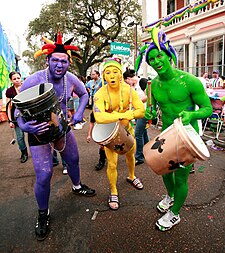
Valborg - Sweden's Mardi Gras
One of the biggest holiday of the Swedish year is approaching. Tomorrow is Valborg (Valpurgis for the English speakers). Valborg celebrates the arrival of springtime; the introduction of the month of May. Bonfires are lit, preferably with old furniture or random stuff that people don't need anymore; it is a time for renewal and rebirth. Kids light firecrackers and dare each other to stand close to the fire. However nice and festive that is, the Uppsala-way of celebrating has few, if any, opponents when it comes to Swedish parties. All day drinking (outside, celebrating spring) running around, rejoicing, spraying champagne, barbecuing, fooling around, peeing in the bushes, singing and dancing. It is madness for two whole days (for the hardcore, three), committing every possible pagan heathen sin in celebration. It does not get much better.

Sadly, I cannot say that I have experienced the American Mardi Gras, but from what I know it is the closest comparison I can make it with a U.S. festivity, aside from perhaps St. Patrick's Day. The carnival-like atmosphere, drunkenness, and celebration of sin, is what makes the Swedish Valborg and the American Mardi Gras the cousins of crazy parties, if you will. A time when otherwise suppressed people let go, let loose, let it happen. It is a beautiful thing. I will start it now; meet you in the parks, in the bushes, and other the champagne. Rejoice!


Sadly, I cannot say that I have experienced the American Mardi Gras, but from what I know it is the closest comparison I can make it with a U.S. festivity, aside from perhaps St. Patrick's Day. The carnival-like atmosphere, drunkenness, and celebration of sin, is what makes the Swedish Valborg and the American Mardi Gras the cousins of crazy parties, if you will. A time when otherwise suppressed people let go, let loose, let it happen. It is a beautiful thing. I will start it now; meet you in the parks, in the bushes, and other the champagne. Rejoice!
Wednesday, April 28, 2010
What's It All About?
Why write yet another blog about the United States? It's been done, we've heard it, we've read it. No, you haven't.
There are special reasons for writing the story of American influences and presence in Sweden, and Sweden's existence and impact on America, as well as the special relationship between the two countries.
In relative terms, Sweden had the third highest immigration rate to the United States from the middle of the 19th century up until World War II, only surpassed by Ireland and Norway. The gives Sweden a special place in the creation of American life and society, and it puts America close in the "mental map" of many Swedes as personal and biological ties are created between the two countries by immigration. I would argue that the US are closer to Swedes than are many European countries. American influences are also heavily present in Swedish society and everyday life, perhaps mostly in the form of popular culture such as TV-series, movies, music, and clothing.
On the other hand Sweden and the United States are in many characteristics very different nations; our history of political and societal ideas vary vastly in certain aspects. Today it is perhaps most visible in the differentiated views on religion, welfare and taxes, and our relationship with the rest of the world.
The US and what goes on "over there" interests us and attracts significant media attention, not only in the field of politics but also sports, culture, media, religion, and "everyday life". These days Swedish mainstream media are occupied with the oil disaster that might come to threaten wildlife and nature on the Southeast coast of the US.
All these subjects and more will be explored and analyzed on this site. So stay tuned.
There are special reasons for writing the story of American influences and presence in Sweden, and Sweden's existence and impact on America, as well as the special relationship between the two countries.
In relative terms, Sweden had the third highest immigration rate to the United States from the middle of the 19th century up until World War II, only surpassed by Ireland and Norway. The gives Sweden a special place in the creation of American life and society, and it puts America close in the "mental map" of many Swedes as personal and biological ties are created between the two countries by immigration. I would argue that the US are closer to Swedes than are many European countries. American influences are also heavily present in Swedish society and everyday life, perhaps mostly in the form of popular culture such as TV-series, movies, music, and clothing.
On the other hand Sweden and the United States are in many characteristics very different nations; our history of political and societal ideas vary vastly in certain aspects. Today it is perhaps most visible in the differentiated views on religion, welfare and taxes, and our relationship with the rest of the world.
The US and what goes on "over there" interests us and attracts significant media attention, not only in the field of politics but also sports, culture, media, religion, and "everyday life". These days Swedish mainstream media are occupied with the oil disaster that might come to threaten wildlife and nature on the Southeast coast of the US.
All these subjects and more will be explored and analyzed on this site. So stay tuned.
Subscribe to:
Posts (Atom)
